Home >> News >> Industry News
Industrial luminaires—low bay and high bay lights—are designed to support a safe and productive work environment. While industrial lighting is challenged to meet the highest requirements in terms of performance and efficiency, the need for durability and reliability from an industrial lighting system often takes precedence over other design considerations due to the long running hours, relatively high wattages and tough operating conditions typically involved. As LED technology pushes the boundaries of efficiency in power conversion, optical delivery and spectral power distribution, building a lighting system that thrives in harsh environments continues to pose a challenge. Oftentimes, industrial luminaries need to handle the extreme conditions such as high humidity, corrosive atmospheres, dust, vibrations, temperature fluctuations, and dirty power. The benefits of LED lighting can only be reaped when LED lights are able to survive in these conditions.
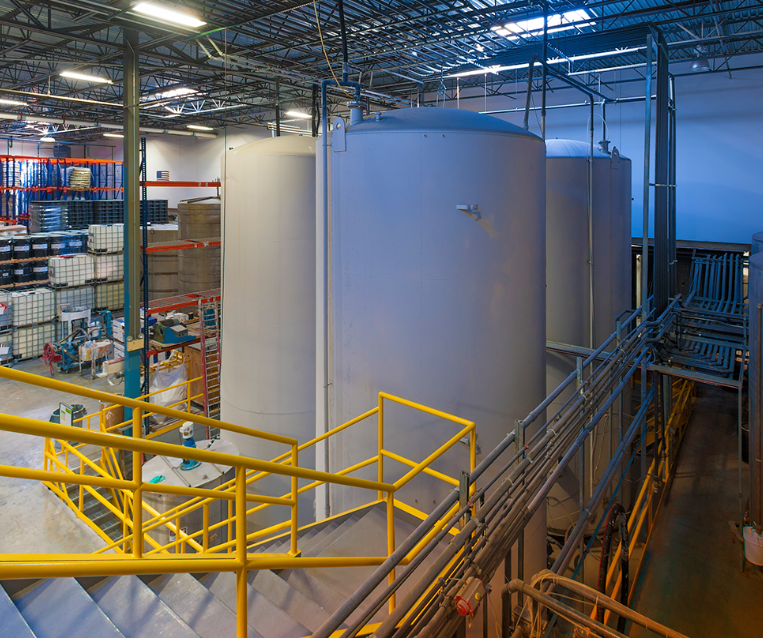
The design of an LED lighting system is a multidimensional engineering process which demands a careful consideration in the electrical, thermal, optical, and mechanical aspects of the product. On the front end is electrical, thermal and optical engineering which has a direct impact on the system performance. There is less emphasis on the mechanical performance of luminaires developed for the commercial and residential lighting markets because of the less demanding conditions of the operating environment. However, the mechanical performance of a luminaire, namely a luminaire’s behavior under environmental extremes, is of decisive importance to failure-free operation in industrial locations.
The two extreme conditions that are often experienced by industrial luminaires are high humidity and corrosive atmospheres. Often found in heavy industrial locations, chemical facilities, food processing plants, coastal environments or tropical climates, these environmental extremes are constant threats to the reliability of a luminaire. A compromise in mechanical engineering may result in an catastrophic failure of the industrial lighting system.
Corrosion is a chemical or electrochemical action which attacks metal and causes it to undergo an anodic change. The corrosive agent, a substance that initiates the reaction, is reduced or undergoes a cathodic change. The corrosive attack converts the metal into a metallic compound, such as an oxide, hydroxide, or sulfate. All corrosive attack occurs on the surface of the metal and, under severe, prolonged conditions, the destructive alteration continues until the integrity of the metal is jeopardized. The corrosive agents include acids (sulfuric acid, halogen acids, etc.), alkalis and salts, with atmosphere and water being the two most common media for these agents.
The atmospheric air in industrial environments can be laden with corrosive compounds such as metal oxides, chlorides, sulfates and sulfuric acid. The presence of oxygen, water or high humidity can facilitate the corrosion process and lead to various forms of corrosion including general corrosion and localized corrosion such as galvanic, pitting, filiform, intergranular, and exfoliation corrosion. Aside from industrial emissions, the atmosphere in coastal or marine environments may be extremely corrosive due to the presence of sodium chloride (salt) and sulfur compounds. These corrosive agents can be carried by sea spray, mist, fog, or prevailing winds. Furthermore, indoor environments such as swimming pool areas, laundry facilities, wash down applications, buildings that accommodate diesel-burning devices, some airhandling applications and water treatment facilities can also produce corrosive atmospheres.
The corrosion behavior of a light fixture is influenced by the external environment to which it is exposed. Major environmental parameters related to operating environment for industrial light fixtures are humidity, temperature, aggressive chemicals and ions, dust and corrosive gases. High humidity is the most intimate partner of corrosion. Humidity refers to water vapor or moisture in the air.
Moisture is present in the air as finely divided droplets of liquid which have a great capacity of dissolving other substances from the environment. Water itself is not corrosive but it becomes corrosive when it binds other contaminants such as chlorides, sulfates, sulfur dioxide, carbon, and nitrates from the air. The corrosive effects of these contaminants can be promoted by water which has the ability to act as an electrolyte and conduct a current. The corrosiveness of water depends on the dissolved contaminants and oxygen concentration in the water.
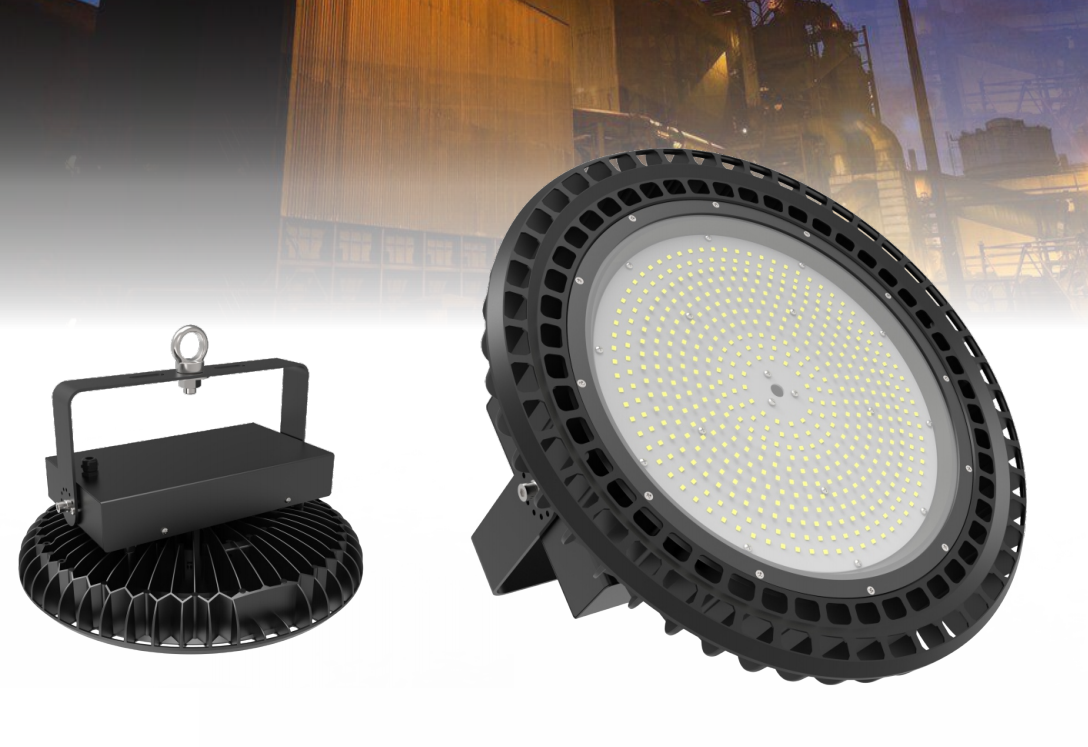
Industrial pollutants are often corrosive agents which can be placed in contact with light fixtures by moisture or water and cause severe corrosion of metals. Since salt solutions are electrolytes, sea winds that contain tiny droplets of salt water make coastal environments highly corrosive. Water from a humid environment can be deposited on the metal housing of a light fixture by condensation and absorption. Excessive relative humidity can accelerate the absorption rate. Corrosion caused by humidity can progress quickly by extreme changes in temperature. The change in the air temperature causes condensation, which will leave corrosive agents deposited on the surface of a metal when the condensed moisture evaporates.
LEDs are semiconductor devices capable of achieving a meaningfully longer lifespan than all the conventional products only when they are properly integrated into a system. The composition of LED lighting systems is far more complex than that of traditional light fixtures. Thermal management is critically important to achieve controllable LED junction temperatures for lumen maintenance and color stability. Tight line and load regulation must be provided to ensure the LEDs are driven under optimal electrical conditions. Custom optical systems are used to create fully optimized LED lighting systems that deliver highly efficient and precisely controlled optical distributions.
In integrating LEDs into a system, the first step is to carefully evaluate the application environment and operational stress conditions. When LED luminaires are to be used in environments that can expose them to high humidity conditions, industrial pollutants or coastal atmospheres, corrosion and ingression protection must be considered from the design stage to prevent adverse effects on the thermal, electrical and optical systems as well as the LEDs.
Since humidity plays a major part in both the corrosion- and moisture-induced failure processes, industrial luminaires must be reliably protected against ingress of water, moisture, and lower surface-tension liquids such as cleaning fluids. High bay and low bay LED lights installed high humidity and corrosive environment are required be sealed to a minimum ingress protection rating of IP65. The luminaires fall into the highest class of dust ingress protection and are jetproof on all sides, including the electrical enclosure if the driver and control circuits are separately mounted.
Depending on the applications, the degrees of protection against moisture can run up to IPX8 (protected against continuous submersion) or IPX9K (protected from steam jet cleaning). The enclosures are usually sealed with one-piece silicone gasket. Care must be taken to prevent the occurrence of internal vacuums or pressure build-ups that stress the silicone gaskets due to rapid/extreme temperature changes. Installing a vent in a sealed enclosure allows to equalize pressure differentials and reduce condensation while blocking water and contaminants.
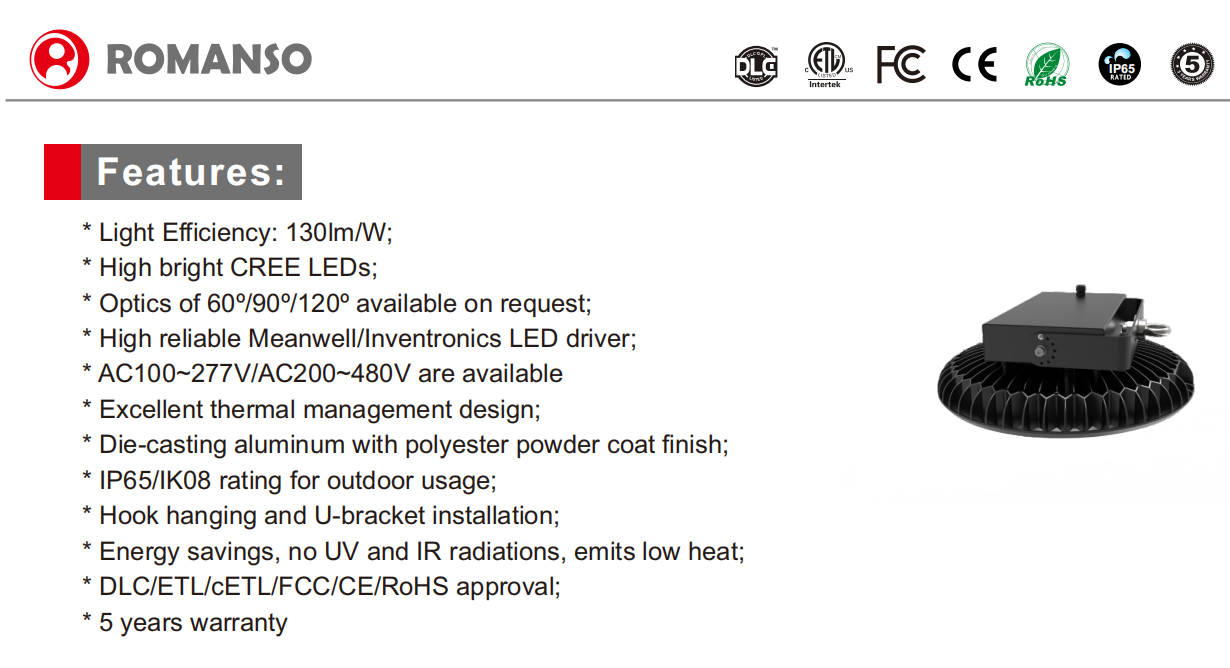
Corrosion protection of aluminum housings is accomplished through surface treatment. The primary method of surface treatments is to apply an electrochemical (anodizing) or chemical (chromating) conversion coating which creates a barrier between the corrosive environment and the aluminum surface. These treatments increase the adhesion to the aluminum surface and decelerate corrosion underneath the organic coating.
Organic coatings are often applied on aluminum substrates to provide durable scratch- and chemical-resistant finishes for enhanced corrosion protection and decorative purposes. The organic coating is usually a powder form paint that uses a triglycidyl isocyanurate (TGIC) polyester as the binder. The corrosion performance of the aluminum housing is assessed in laboratory-based accelerated tests through the use of chemically altered salt spray solutions.